
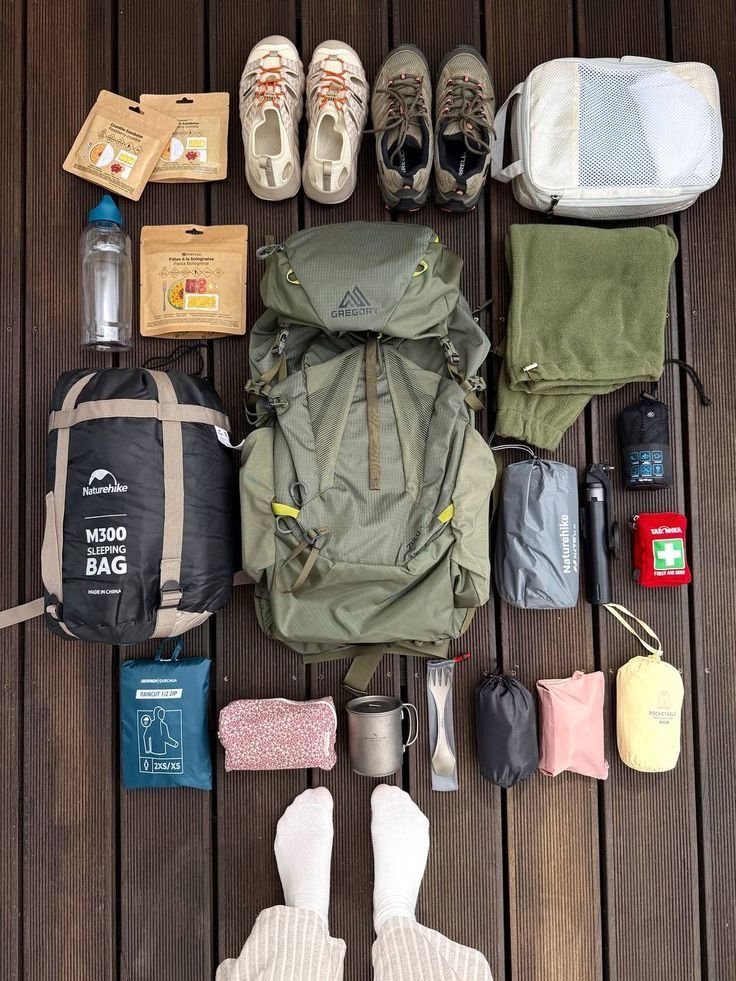
The 10 essential items for hiking backpack ensure safety, covering navigation, sun protection, insulation (extra clothing), lighting, first aid, fire starting, tools/repairs, emergency shelter, extra food, and extra water (with purification), focusing on systems for dealing with unforeseen events such as weather changes or getting lost, even on short day hikes. These items transform a minor setback into a manageable situation, so always carry them, even if you think you won’t need them.
Classic 10 Essential Hiking Backpack System
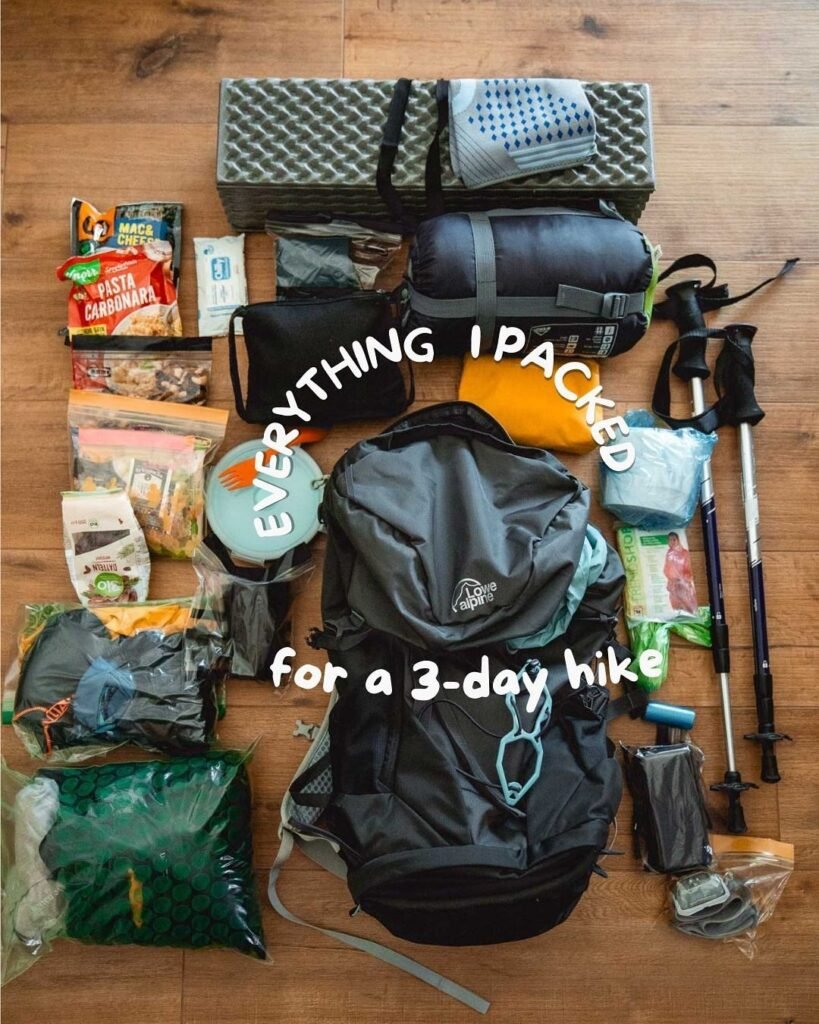
Adapted from the original list created by mountaineers in the 1930s, the modern system focuses on functional categories rather than specific items. This ensures you’re prepared for any situation.
- Navigation
Don’t rely solely on your phone.
- Detailed physical map of the area in a waterproof case.
- Compass (and learn how to use it with your map).
- Backup GPS device (laptop or watch).
- Fully charged phone with offline maps (such as Gaia GPS or AllTrails), plus a portable power bank.
- Sun Protection
The sun is stronger at higher altitudes.
- Sunglasses with UV protection.
- Sun-protective clothing (hat, long sleeves).
- Sunscreen (SPF 30+) and lip balm with SPF.
- Tip: Reapply every two hours, even on cloudy days.
- Insulation
The weather changes rapidly in the mountains.
- Bring an extra layer in addition to what you’re wearing. Consider a fleece, a padded jacket, or a wool sweater.
- A waterproof jacket and pants; never hike without an outer layer.
- Be prepared for temperatures 10 to 20 degrees colder than expected.
- Lighting
You never plan to hike in the dark, but it can happen.
- A headlamp (preferred) or a flashlight with spare batteries.
- Check the batteries before you leave. A small spare light or glow sticks are a good addition.
- First-Aid Supplies
Be prepared for blisters, cuts, and aches.
- A pre-assembled hiking first-aid kit.
- It should include: blister treatment (moleskin/leukokinetic tape), bandages, gauze, antiseptic wipes, pain relievers, and any personal medications.
- Learn how to use everything in your first-aid kit.
- Fire
An essential emergency tool for warmth and signaling.
- Waterproof matches, a lighter, and/or storm-resistant fire starters.
- Store them in a waterproof container.
- Practice starting a fire before you need them.
- Repair Kit and Tools
For repairing gear and improvising solutions.
Multitool or knife.
- Duct tape (wrap some around your trekking pole or water bottle).
- Safety pins, rope, and a strap for repairing gear (like a Voile strap).
- Learn how to make basic repairs to your backpack and clothing.
- Nutrition
Always carry extra food.
- An extra day’s supply of uncooked, high-calorie food (e.g., nuts, energy bars, jerky, dried fruit, chocolate).
- Food fuels you and keeps you going. Pack what you’ll actually want to eat in a stressful situation.
- Hydration
More important than food.
- Pack extra water beyond what you plan to drink. A capacity of at least 2 liters is standard.
- Pack a water treatment method: filter (e.g., Sawyer Squeeze), chemical treatment (tablets/drops), or UV purifier.
- Never rely on finding untreated water sources.
- Emergency Shelter
This can save your life if you get injured or lost.
- Pack a lightweight, foldable option to protect yourself from wind and wet weather.
- Options: Emergency bivouac sack, thermal blanket, lightweight tarp, or even a heavy-duty garbage bag.
- This is separate from your tent if you’re camping.
Hiking Backpack Features
You need a hiking backpack to carry all your gear. It keeps your hands free and helps you stay organized. When choosing a hiking backpack, look for features that will make your hike safer and more comfortable. Outdoor experts suggest these important features:
A frame or backpack size that fits your body
Adjustable straps for a custom fit
Good back support for heavy loads
Breathable material to keep you cool
Padding and ventilation system for added comfort
Deep side pockets for extra storage
Lightweight and durable design
Water reservoir compatibility
A hiking backpack with these features makes your adventure easier. You’ll be able to move more freely and feel less tired.
Smart Hiking Backpack for Comfort and Balance
How you pack is just as important as what you pack.
- Weight Distribution: Place heavier items (e.g., water reservoir or food) at the bottom and close to your spine. This stabilizes your center of gravity.
- Accessibility: Store rain gear and frequently used items in the outer or top pockets.
- Proper Fit: Adjust all straps (hip belt, shoulder straps, load lifters) so that the weight rests comfortably on your hips, not your shoulders. The backpack should feel stable and snug against your body.