
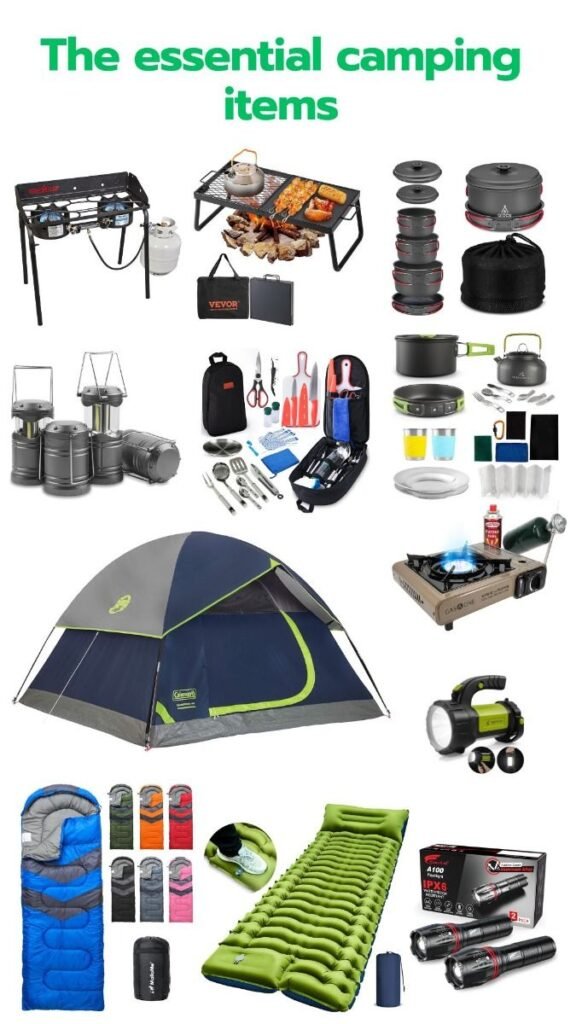
The Ultimate Camping Gear Guide helps you choose smart, reliable essentials for a more comfortable, safe, and enjoyable adventure. From must-have basics to performance upgrades, this guide ensures you’re fully prepared to make the most of every moment outdoors.
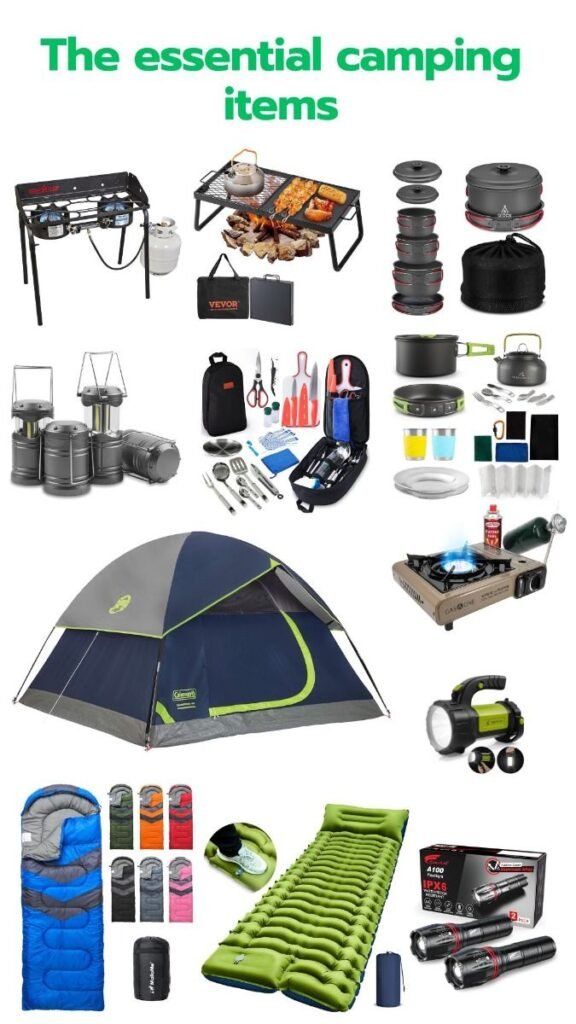
The “Level-Up” Philosophy: Intentionality Over Everything
The philosophy behind superior camping geahttps://www.theblondeabroad.com/ultimate-campsite-packing-gear-guide/r choices is built on three core principles that apply to every camper.
- Gear as a System, Not a Checklist: Your equipment works in synergy. Your shelter, sleep system, and clothing layers form a personal climate-control unit. Your pack is the mobile basecamp that carries your home, kitchen, and bed. Optimizing how these systems interact is more important than owning the single most expensive piece of camping gear.
- The Hierarchy of Needs: Invest strategically. Prioritize purchases that impact safety and fundamental comfort (the Foundation System), then move to items that increase efficiency (the Performance Enhancers), and finally, consider luxuries that personalize the experience (the Game Changers).
- Specs Over Brands: Learn to read the language of camping gear. Understand what “fill power” means in a sleeping bag, what “R-value” means on a sleeping pad, and what “denier” indicates about fabric durability. These specifications are your true guide to performance.
Tier 1: The Foundation System (The Non-Negotiables)
This is the essential camping gear triad. Compromising here will undermine your entire trip.
1. Shelter: Your Mobile Home
Your shelter is your first line of defense. The right choice is dictated by your style of camping travel.
- The Level-Up Move: Transition from a generic, heavy tent to a purpose-built model.
- For Backpackers: Weight and packed size are king. Seek tents made of lightweight nylon (silnylon or silpoly) with aluminum poles. A “trekking pole tent” can save significant weight, making it a premier piece of ultralight camping gear.
- For Car Campers: Space, durability, and comfort are priorities. Look for cabins or domes with high ceilings, large vestibules, and robust fabrics that can handle repeated setup.
- Key Spec: Focus on the “trail weight” or “minimum weight” (tent, poles, rainfly, stuff sack). A full-coverage rainfly is almost always worth the investment for complete weather protection.
2. Sleep System: The Engine of Recovery
Nothing ruins a trip faster than a cold, sleepless night. Your sleep system is the most critical camping gear for comfort.
- Sleeping Bag or Quilt: The temperature rating is a survival limit, not a comfort limit. For comfort, select a bag rated 10-15°F (6-8°C) colder than the lowest expected temperature. Understand fill power (e.g., 800-fill goose down) for down bags—higher numbers indicate better warmth-to-weight efficiency. Quilts are a popular level-up, offering weight savings and more freedom for side sleepers.
- Sleeping Pad: This is your insulation from the ground, not just cushioning. The R-Value is the critical metric.
- R-Value 1-2: Summer use only.
- R-Value 3-4: Ideal three-season camping gear.
- R-Value 5+: Necessary for winter or alpine conditions.
- Pro-Tip: Pair a foam pad (R-2, indestructible) under an inflatable pad for added warmth, comfort, and puncture protection.
3. The Backpack: Your Logistics Hub
This piece of camping gear carries all others. A poor fit can ruin your hike.
- The Golden Rule: Buy your pack LAST, after you know the size and volume of your shelter, sleep, and kitchen systems.
- Fit is Everything: A proper pack transfers 80% of its weight to your hips via a padded, contoured hip belt. Your torso length, not your height, is the key measurement for sizing.
- Capacity Guide: For weekend summer trips, 40-50 liters may suffice. For multi-day, three-season trips, 50-65 liters is the standard. Winter expeditions require 70+ liters.
Tier 2: The Performance Enhancers
With your foundation set, this camping gear increases your efficiency, safety, and culinary satisfaction.

1. The Kitchen System: Morale in a Pot
- Stove Technology: Move beyond a basic single burner.
- Canister Stoves: The standard for balance, simplicity, and speed. Models with integrated pot supports offer superior stability.
- Liquid Fuel (White Gas) Stoves: The high-performance camping gear for cold weather and high altitude, where canister gas fails.
- Water Management: The ultimate upgrade from carrying heavy bottles.
- Squeeze/Pump Filters (e.g., Sawyer, Katadyn): Filter bacteria and protozoa. The workhorse for most backpackers.
- UV Purifiers (e.g., SteriPEN): Lightweight, chemical-free, but require clear water and batteries.
- Chemical Treatment: A vital, ultralight backup in your camping gear kit.
2. Apparel System: Mastering the Layering Principle
Forget cotton. Your clothing camping gear should be a versatile, moisture-managing system.
- Base Layer (Wicking): Synthetics (polyester/nylon) for fast drying; merino wool for superior odor resistance and natural warmth.
- Insulating Layer (Warmth): A lightweight fleece or a packable down/synthetic puffy jacket. Down is warmer for its weight but useless when wet; synthetic insulation retains warmth when damp.
- Shell Layer (Protection): A waterproof, breathable jacket (and pants) with taped seams. This is your non-negotiable shield against wind and rain.
Tier 3: The Game Changers & Personal Refinements
This is where your camping gear becomes uniquely yours, solving specific annoyances and injecting joy.
- The Luxury Chair: From hefty car-camping thrones to ultralight backpacking models (like Helinox), a chair transforms a rocky patch of ground into a living room.
- Power & Illumination: A reliable, high-lumen headlamp with a red-light mode (to preserve night vision) is essential. A high-capacity power bank is modern, critical camping gear for navigation devices and cameras.
- Navigation Redundancy: Level up from a phone-only approach. A physical topographic map and a compass (with the skill to use them) are irreplaceable safety items. For remote travel, a satellite communicator (like Garmin inReach) is the ultimate safety-net camping gear.
- Footwear Ecosystem: Your boots and socks are a single system. Invest in quality merino wool socks to prevent blisters. For trails, decide between the support of mid-height boots and the agility of lighter trail runners.
The Final Audit: Knowledge is the Best Gear You Own
Before any trip, conduct a gear audit. Lay every piece of camping gear out at home. Check for wear, test stoves and filters, replace batteries, and seal seams. Practice pitching your tent. This ritual ensures reliability and builds familiarity—the most valuable asset of all.
Ultimately, the goal of investing in and understanding camping gear is to achieve a state of “effortless immersion.” When your equipment is reliable, appropriate, and second-nature, it disappears into the background, removing barriers between you and the raw beauty of the outdoors. It grants you the confidence to stay longer, go farther, sleep deeper, and weather the unexpected. Your camping gear is the silent partner in every story you’ll tell. Choose it wisely, care for it meticulously, and let it empower you to safely answer the call of the wild, every single time.